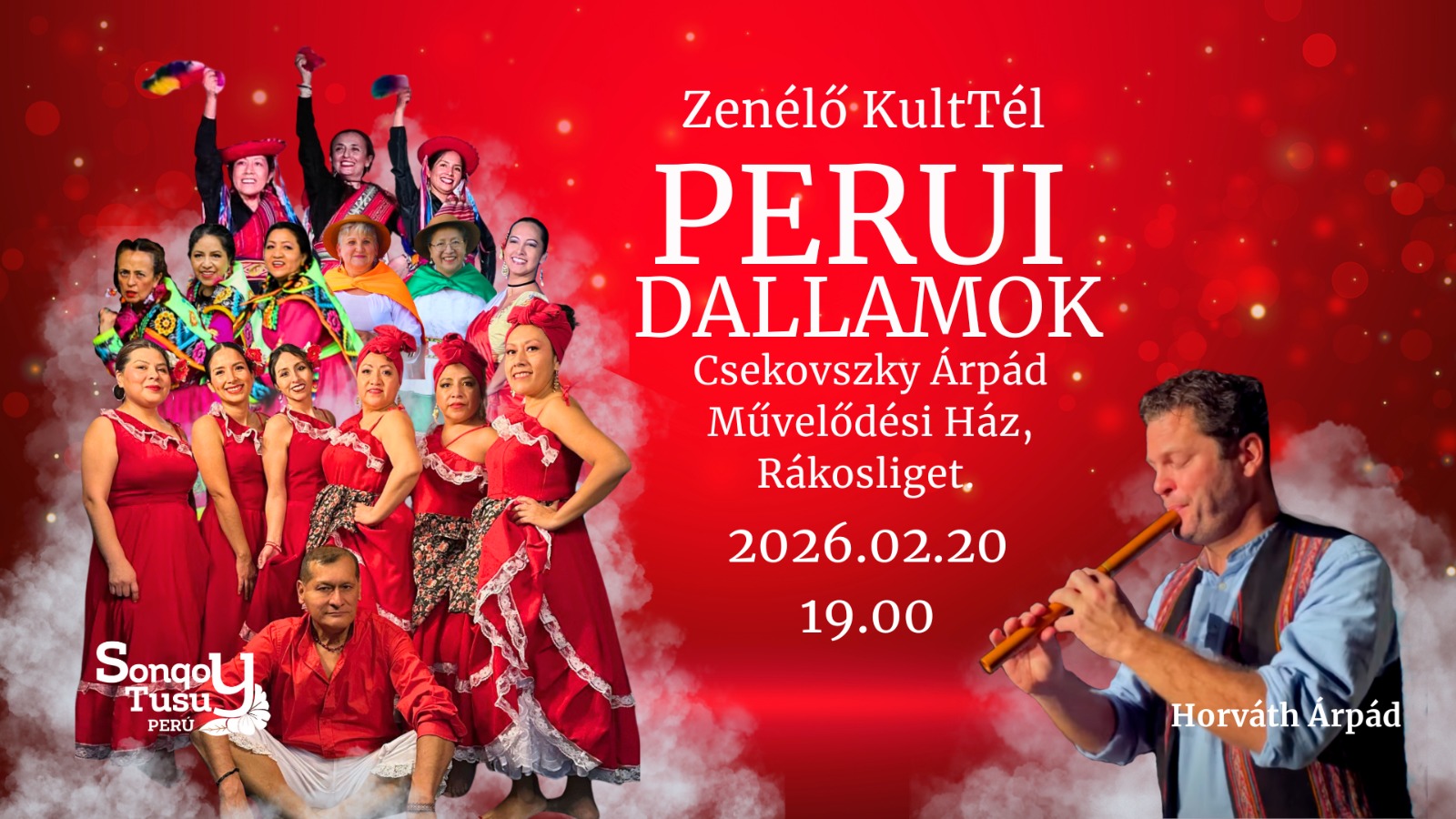
It happened not long ago that I found an interesting event on Facebook, “Melodies of Peru.” I immediately asked my brother to join me in exploring this culturally rare and exciting experience in my home country. I had never realized that there are Peruvians in Hungary who take such care in preserving their culture.
Surprisingly, this was a collaboration between a Hungarian pan flute artist and singer, Horváth Árpád, and “Sonqo Tusuy” — a Peruvian dance group that has been preserving Peruvian traditions for over 10 years in Hungary. The group performed traditional dance styles from various regions of Peru, all presented in beautiful dresses.
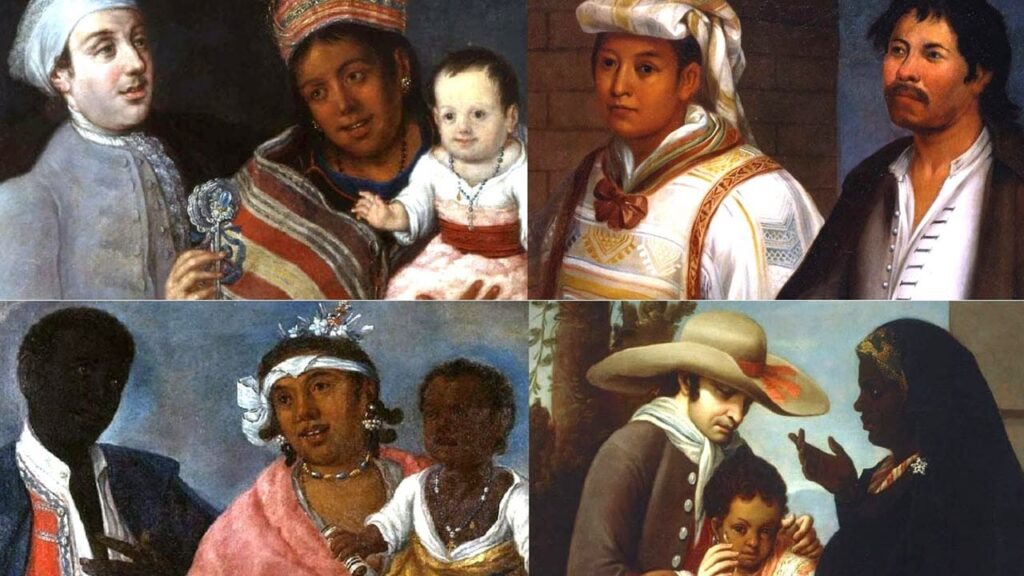
Mestizaje – examples of mixed heritage and physical traits
Before we dive in it is important to mention the mestizaje. This Latin American term refers to the mixing of different peoples and cultures —primarily Indigenous, European, African (through enslavement), and later Asian communities through migration.
The concept emerged during the colonial period, but the term became widely used in the 19th century, especially after the Mexican Revolution. In Cuba the concept promoted by intellectuals such as Fernando Ortiz, later on the revolutionary government adopted the idea as part of a national identity narrative.
In the modern era the usage of mestizaje is often used to emphasize shared hybrid heritage and cultural unity. In Peruvian Culture, this blending can be seen everywhere. This cultural mixing shaped everyday life as well as artistic expression. Dance, music, clothing and even food reflect this shared heritage.
Dance Styles
Marinera: At first, this was the type of dance that reminded me of Spanish dance style. The dresses, the movements, and the music were really revealing themselves.
Marinera feels like a living symbol of Peru. You can see it in different regions of Peru, the most famous being the Marinera norteña from the north, but Lima has its own elegant style, and other regions interpret it in their own colorful ways.
The marinera tells a story of courtship. The music often begins with the sharp rhythm of a snare drum or the warm beat of the Peruvian cajón. A man and a woman face each other, bow slightly, and begin a playful dialogue without words. They move in circles, never touching each other at first. She turns away, avoiding his gaze, while he approaches with confident but refined steps. In one hand he holds a straw hat, in the other a white handkerchief — a significant element of this dance, as the handkerchief becomes part of the conversation, swirling in the air.
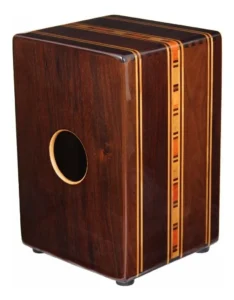
Cajón - box-shaped percussion instrument
As the rhythm intensifies, so does the interaction. He may run in a dramatic gesture that signals persistence, while she responds with subtle shifts of acceptance. Getting closer to the end, the energy rises and the movements become more expressive — until he kneels as a sign of devotion, charged with emotion, before the music begins again, echoing the northern saying: there is no first without second.
The themes behind marinera songs often revolve around love, longing, family, and tradition, although many performances are purely instrumental (the movement is telling the story in this case). The dance is deeply rooted in Peruvian identity. Every year, countless competitions are held across the country, but the most renowned takes place in Trujillo.
Festejo: Festejo is one of the most vibrant and energetic dances of Peru, strongly rooted in Afro-Peruvian culture.
It originated in the coastal regions where African communities, brought during colonial times, preserved their rhythms, movements, and festive spirit despite difficult historical circumstances.
The dance is lively, playful, and full of expressive body movements, especially in the hips and feet. Dancers often improvise while following the powerful rhythm of instruments such as the cajón, drums, and clapping patterns, creating a contagious atmosphere. The music itself feels celebratory, inviting both dancers and spectators to share the joy.
Festejo is a beautiful example of Peruvian mestizaje, where African musical traditions blended with local and Spanish elements over time. Today it remains a symbol of cultural pride and vitality along the Peruvian coast, reminding audiences of the important Afro-Peruvian contribution to the country’s identity.
Saya: Saya is a dance and musical expression that comes from the Afro-Bolivian communities of the Andean region, especially around the Yungas valleys. Over time, this tradition also became present in southern Peru, where cultures and communities have long interacted across the Andes.
The rhythm of the saya is powerful and very recognizable. Groups of dancers move together in lines while singing in a call-and-response style, accompanied by drums and Andean instruments. The choreography feels collective rather than individual, creating a strong sense of unity and shared energy among the performers.
The dance carries deep historical roots connected to Afro-descendant communities who preserved their cultural identity through music, rhythm, and celebration. At the same time, Andean influences can also be seen in the costumes, melodies, and instruments.
In this way, saya is another beautiful reflection of the cultural blending that characterizes the Andean world, where African and indigenous traditions meet and create something unique.
Tondero is a traditional dance from the northern coast of Peru, especially the regions of Piura and Lambayeque. It is known for its expressive movements and the playful interaction between two dancers.
The dance tells a story of courtship. A man and a woman circle around each other, sometimes approaching and sometimes stepping away, creating a lively and flirtatious exchange. Dancers often use a handkerchief (pañuelo) as part of the choreography, waving it while turning and moving around their partner.
Tondero reflects the rich cultural mix of Peru. Its music and rhythm were shaped by Spanish, African, and Indigenous influences, which blended together over time along the northern coast.
The music usually begins slowly and then becomes more energetic, accompanied by guitar, rhythmic clapping, and sometimes the cajón. The result is a dance that feels both emotional and joyful at the same time.
Today, Tondero remains an important part of Peruvian cultural celebrations and continues to be performed at festivals and cultural events around the world.
Valicha: Valicha is a traditional Huayno from the Cusco region of Peru, celebrated for its distinctive melodies and rhythms that reflect the heart of Andean culture. Although technically a musical style, Valicha is often expressed through dance, offering a vibrant way of experiencing and sharing the music. The choreography usually involves group participation, where dancers engage in playful, spirited movements that mimic courtship, celebration, and communal storytelling.
Rooted in the highland communities of Cusco, Valicha captures the joy, resilience, and creativity of the Quechua people. Its steps and gestures are more than entertainment—they are a living expression of cultural identity, connecting performers and audiences to centuries of Andean tradition. Whether performed in festivals, local gatherings, or cultural presentations, Valicha embodies the social and festive spirit of Peru’s mountainous regions, keeping the heritage alive for future generations.
Baile de Selva: My personal favourite, as it best represents the connection to our mother nature. Baile de Selva represents the cultural traditions of the Amazonian regions of Peru. Compared to the dances of the coast or the Andes, these performances often feel more closely connected to nature and the spiritual world of the rainforest.
The movements are usually fluid and expressive, sometimes imitating animals, hunting scenes, or everyday life in the jungle. The rhythm is guided by percussion instruments and traditional melodies, creating a lively and almost hypnotic atmosphere.
What I personally enjoyed most about this dance style was the strong sense of harmony with nature. The choreography, the colorful costumes, and the music together seemed to celebrate the natural world and the deep relationship between people and the Amazon environment.
Zapateo: A dance style known for its powerful and rhythmic footwork. The name itself comes from the Spanish word zapato (shoe), referring to the striking sounds created by the dancer’s steps.
In many performances, the dancers demonstrate impressive control and speed as they produce complex rhythms using only their feet. The dance often becomes a kind of friendly competition, where performers try to show their creativity and skill through increasingly fast and intricate steps.
Although zapateo has roots in Spanish flamenco traditions, in Peru it developed its own character through the influence of Afro-Peruvian rhythms and local musical styles. Because of this mixture, the dance perfectly reflects the idea of mestizaje, where different cultural elements combine to form something unique and expressive.
Handcrafted Items
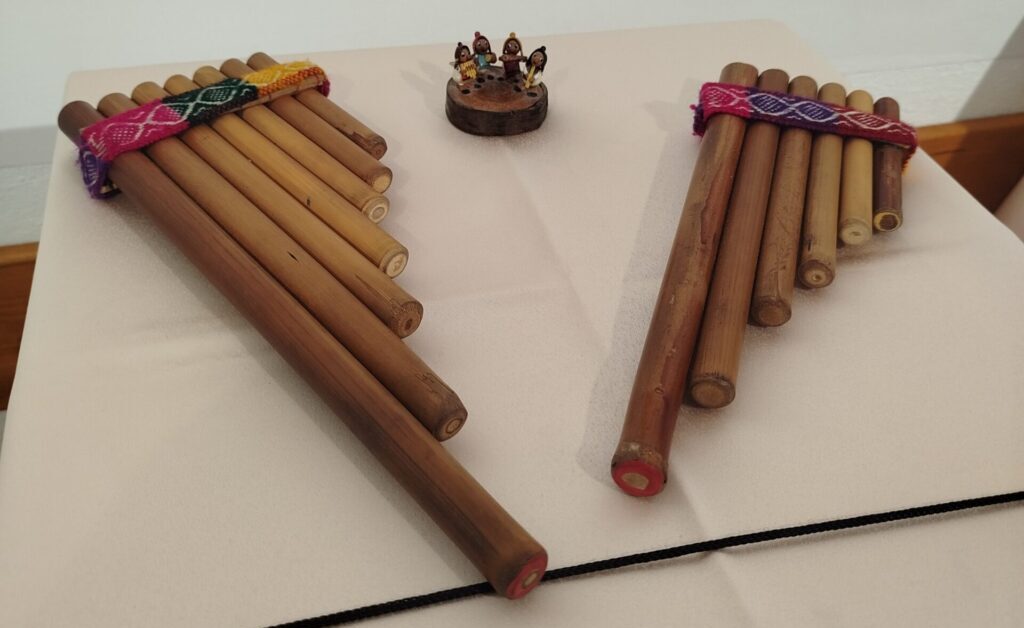
Zampoña - panpipe(eng) - pánsíp(hun)
Zampoña - The "zampona" most commonly known as panpipe in English is an ancestral Andean wind instrument also known as "siku" or "antara". It consists of cane tubes of varying lengths that produce a melodic and spiritual sound, used in Andean rituals, festivities, and community celebrations. The zampona remains a highly valued cultural and musical symbol in the Andes.
Food
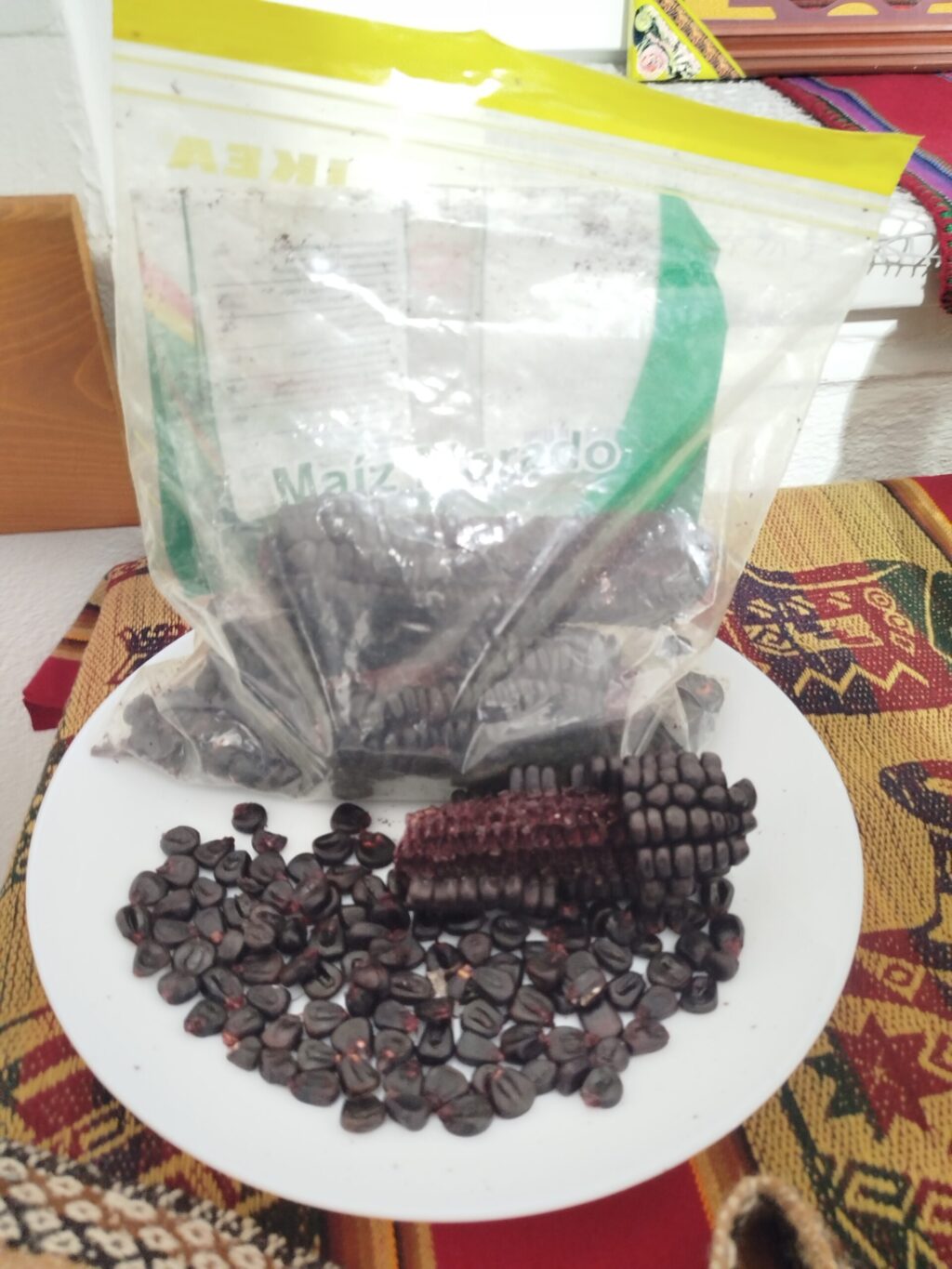
Maíz morado
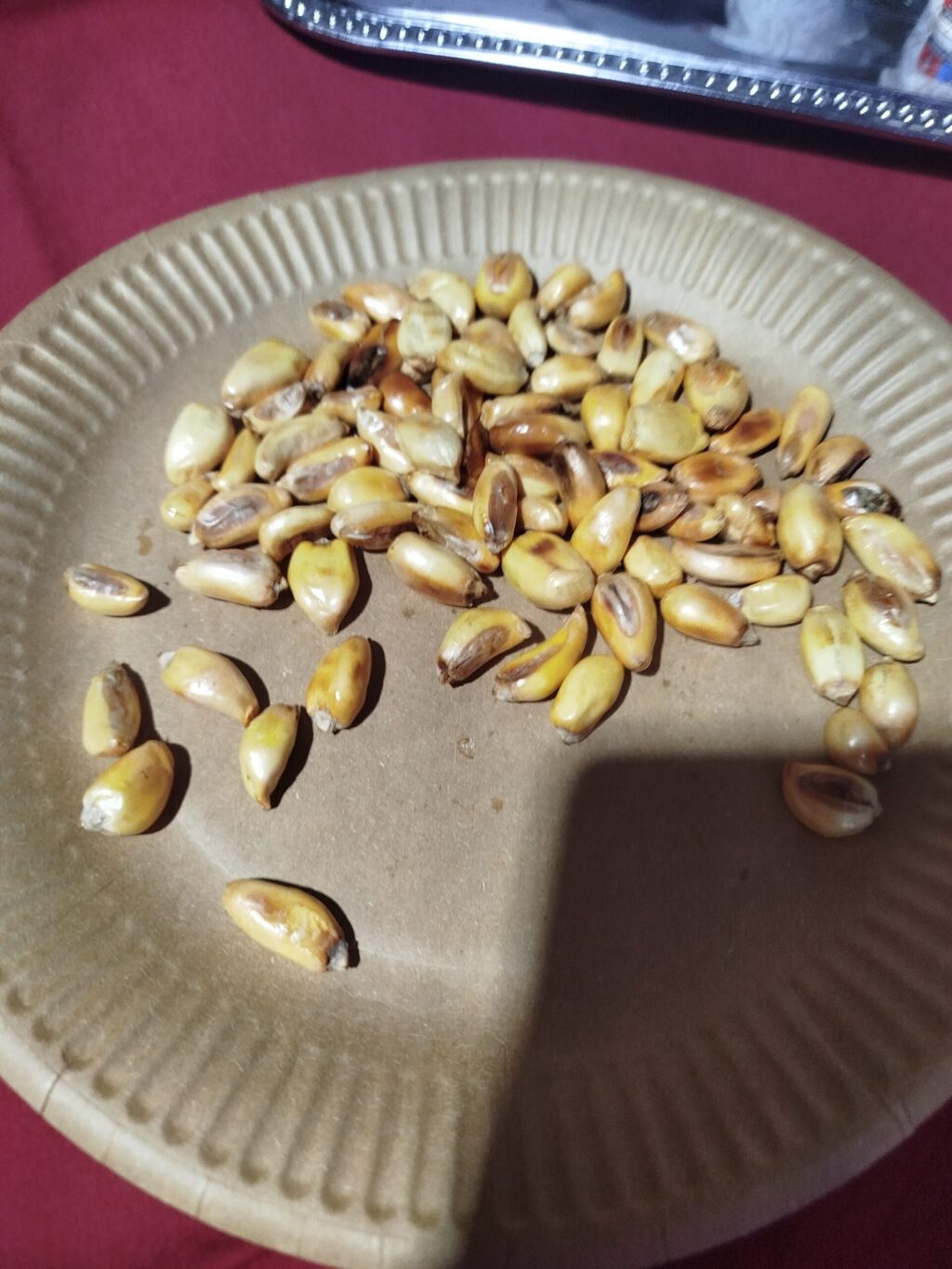
Cancha - toasted corn kernel
Maíz morado: Purple corn is an ancestral variety that originates from the Andes. Its deep color—ranging from violet and purple to almost black—comes from its high concentration of anthocyanins. These natural pigments are known for their strong antioxidant properties and are believed to have anti-inflammatory and cardiovascular health benefits.
Cancha (de maíz): Cancha is a traditional Peruvian and Andean snack made from large dried corn kernels (maíz chulpe). The kernels are usually toasted or sometimes lightly fried until they become crunchy, developing a starchy and slightly nutty flavor. Unlike popcorn, the kernels do not fully burst open; instead they puff slightly while keeping their original shape, creating a unique texture that is crispy on the outside and soft inside. I loved ir... ñumiii.
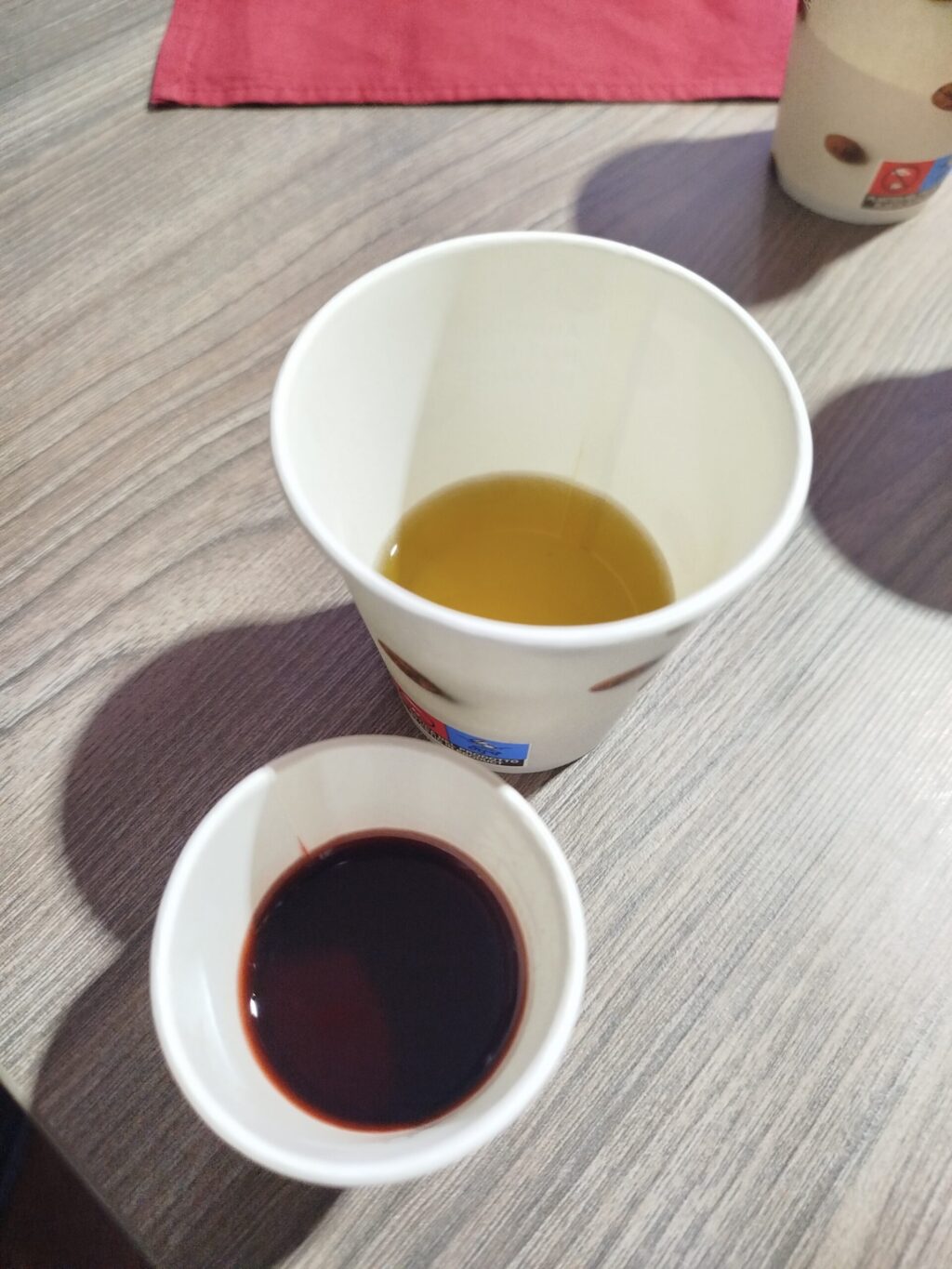
Liqueur y herbal tea
The audience got some taste of the cancha, licor and herbal tea.
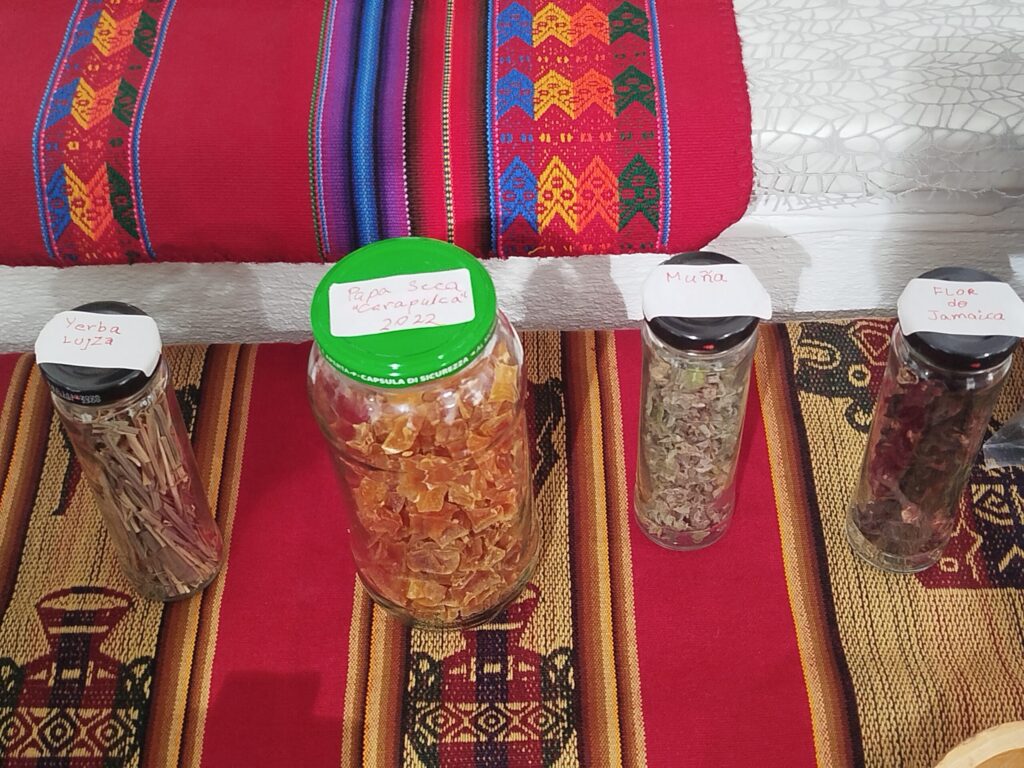
Dried herbs / vegetables / fruits
Containers
During the evening I also noticed several beautifully decorated handcrafted containers on display. From small traditional cups and carefully made jars, each with its own patterns and colors. Some of these jars are traditionally used for serving chicha, the well-known fermented corn drink of the Andes.
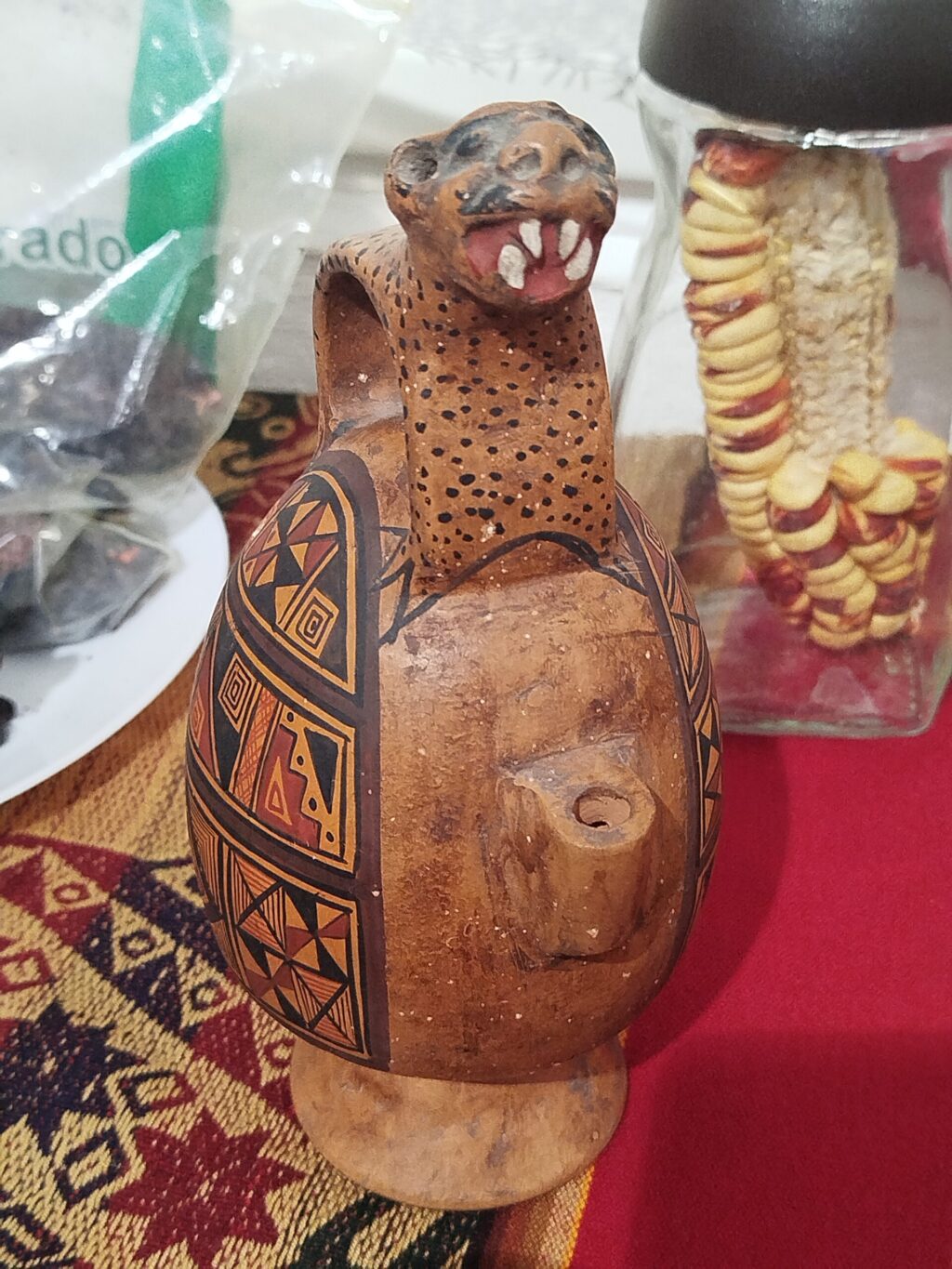
Aryballo/Urpu
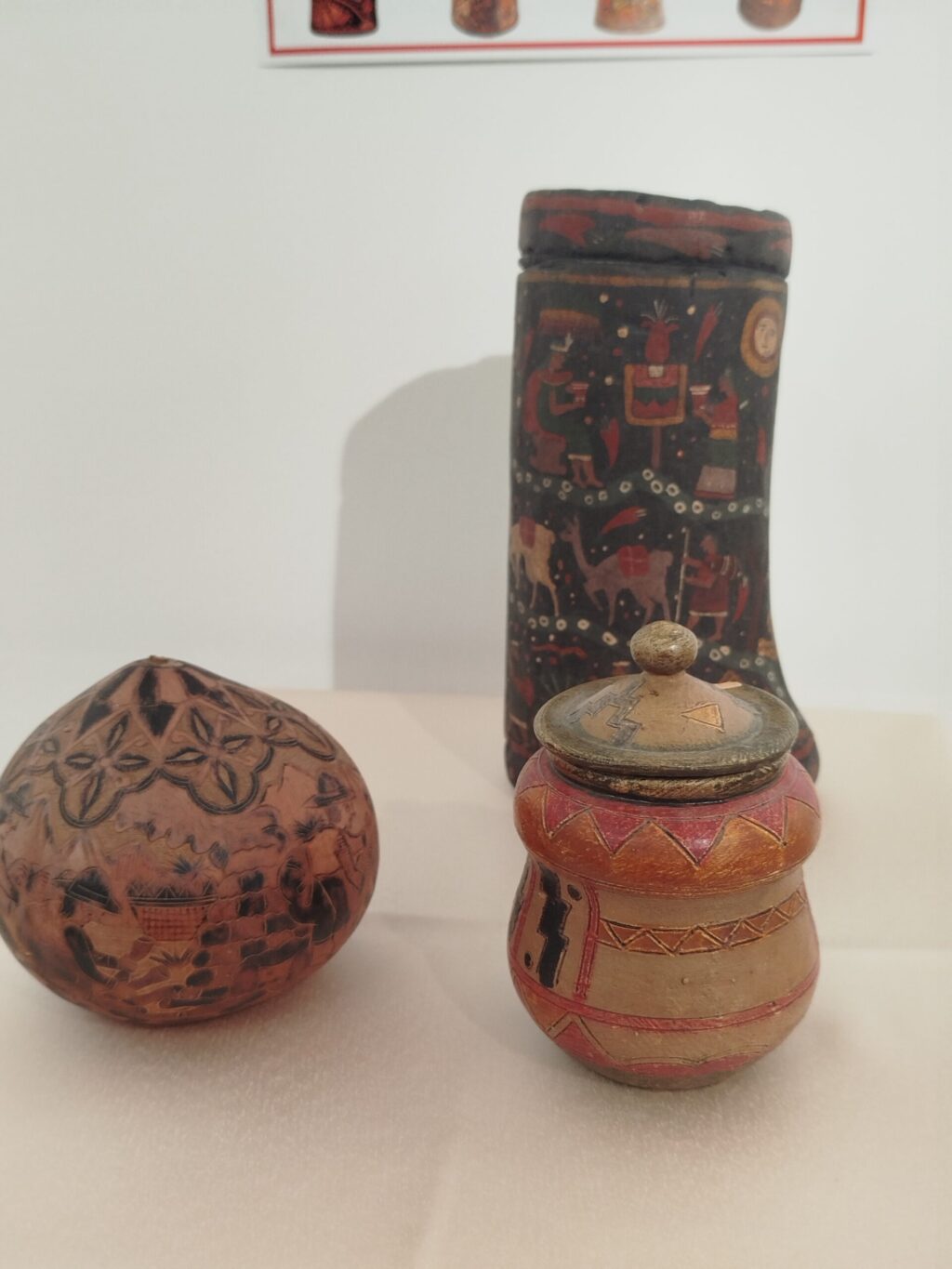
Decorated Containers
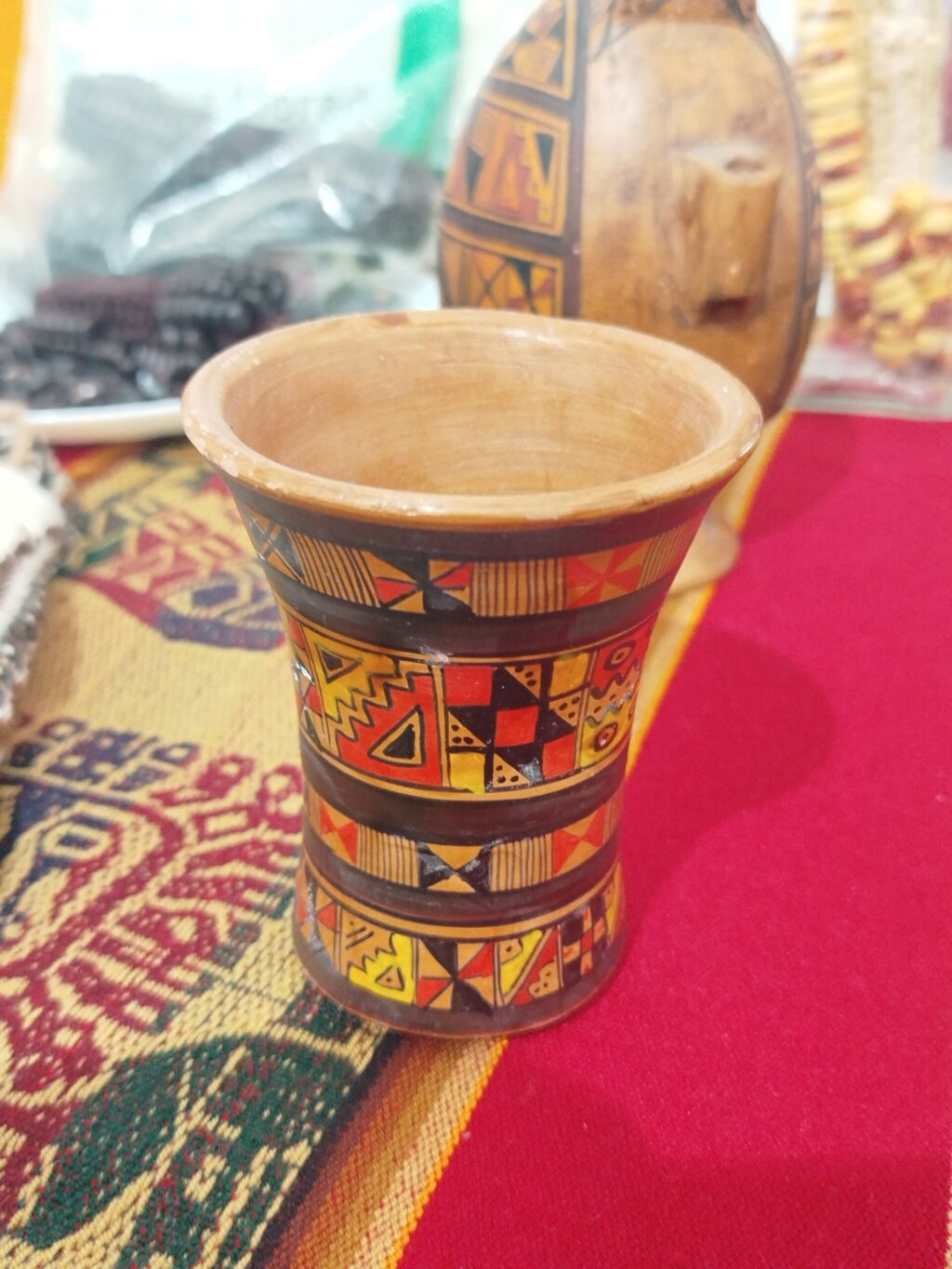
Kero
Aryballo/Urpu: The Aríbalo, also known as Urpu, is a traditional ceramic vessel from the time of the Inca Empire. With its tall body, narrow neck, and pointed base, it was mainly used for storing and carrying liquids such as water or chicha. These jars were often decorated with geometric patterns typical of Inca art, reflecting the rich pottery traditions of the Andean cultures.
Kero: The kero is a ceremonial cup used by the Incas in ritual ceremonies to hold chicha, a fermented corn beverage. Traditionally made of wood, stone, or clay, it was often decorated with vibrant colors and hand-painted scenes depicting religious rituals, battles, or Andean symbols. Today, keros are still preserved and used by Andean communities in traditional ceremonies.
Knitting
One of the most beautiful examples of Peruvian craftsmanship can be seen in hand-knitted wool items.
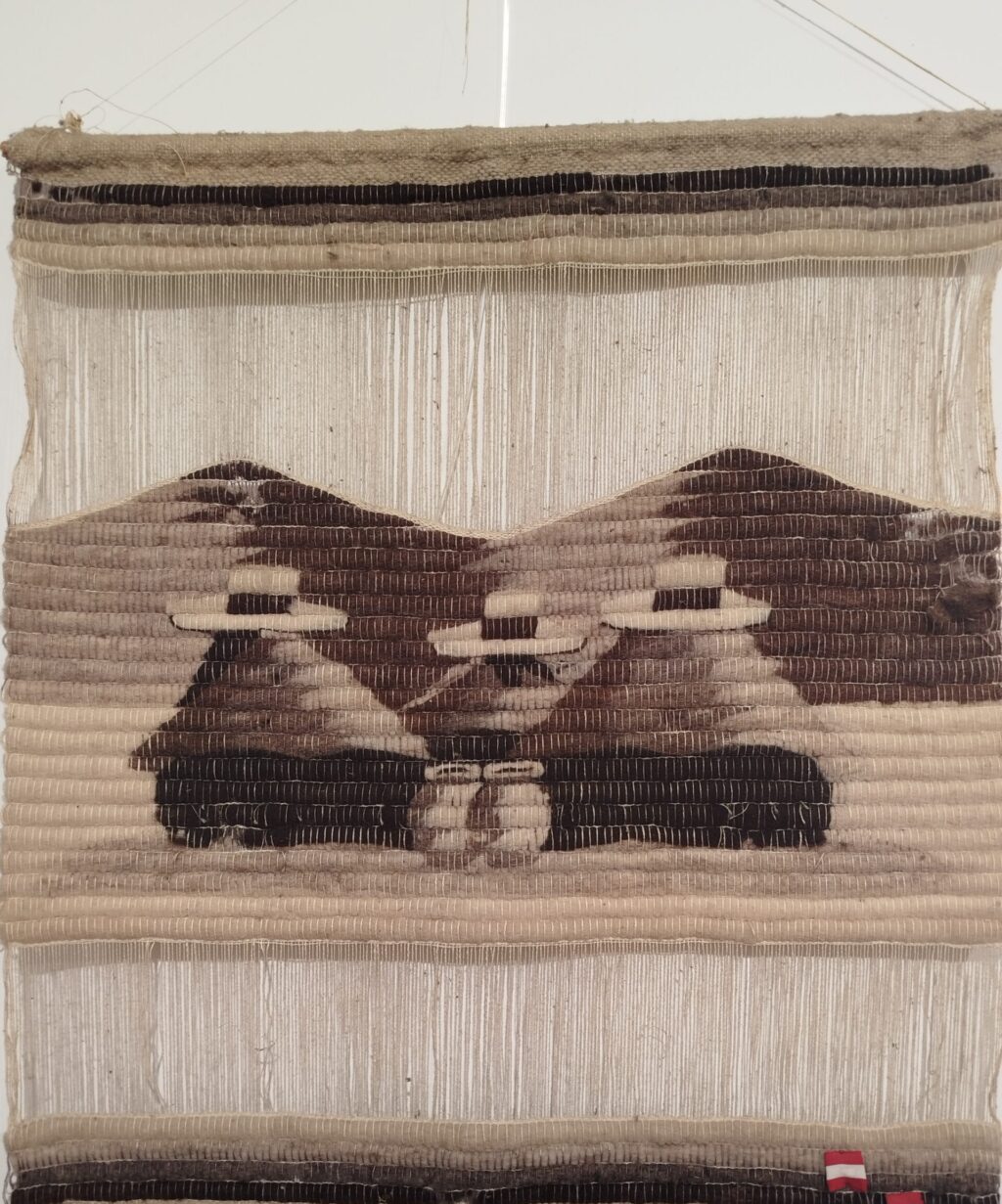
Peruvian fabric image
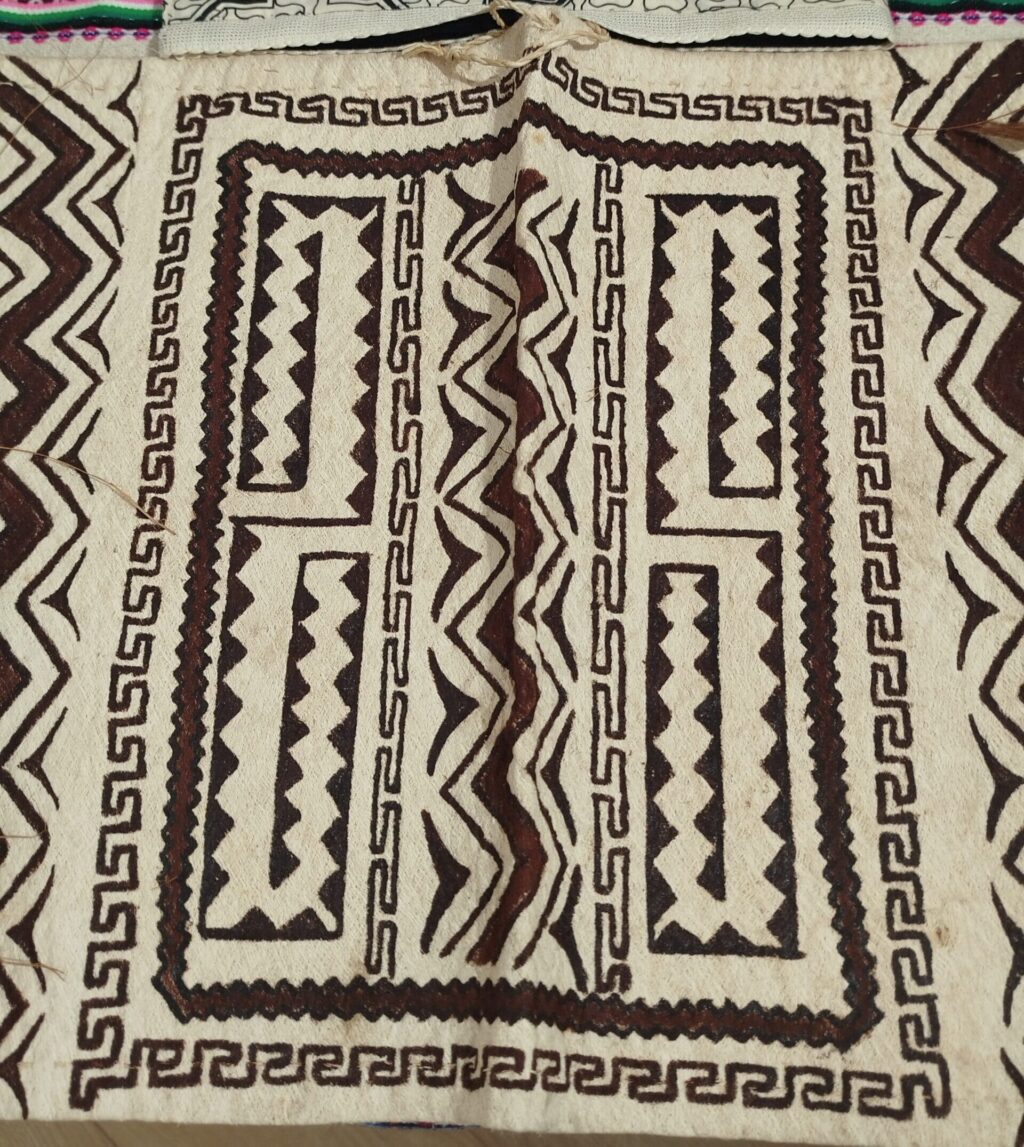
Peruvian fabric motif
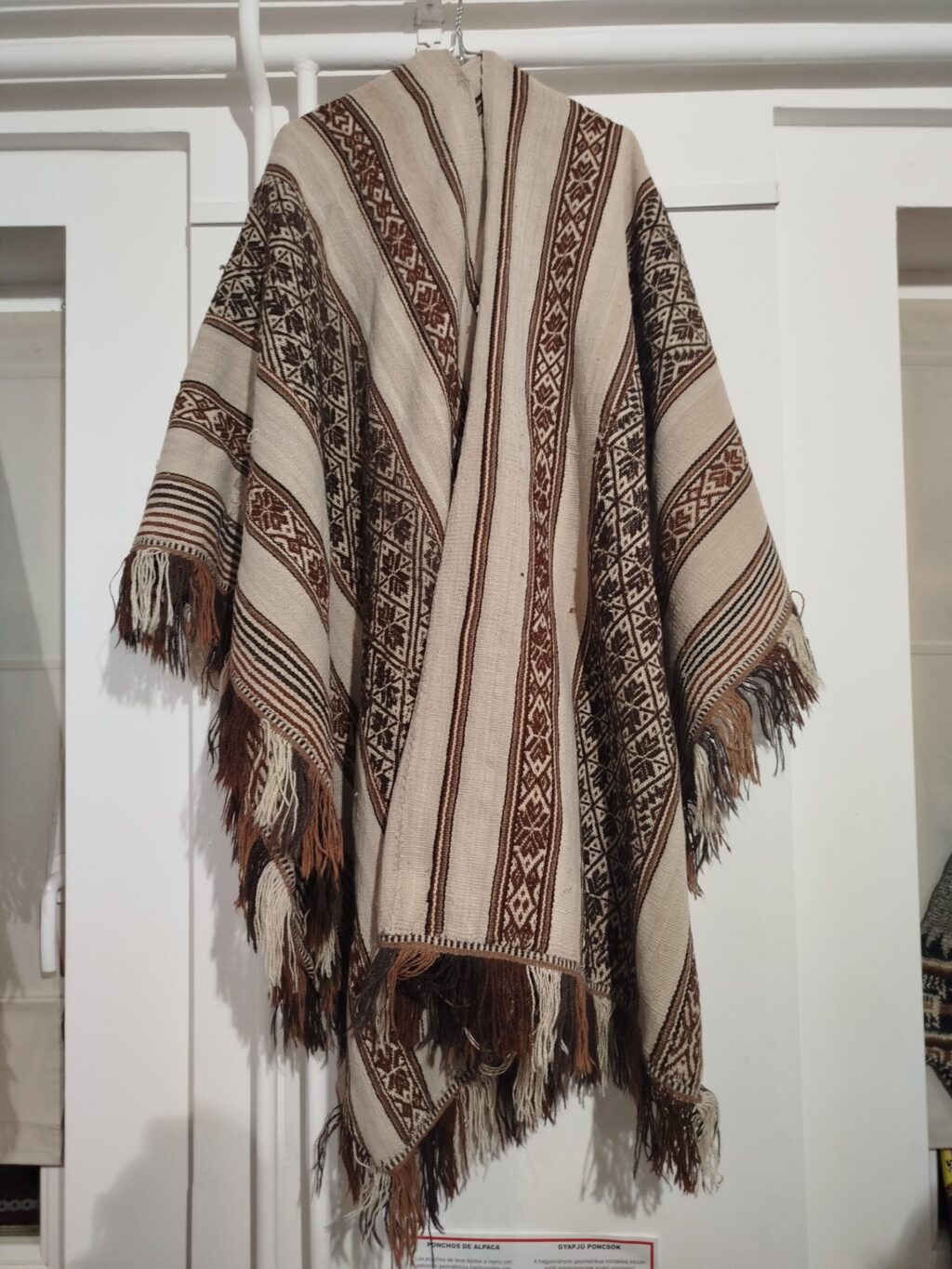
Poncho/punchu
Ponchos de Alpaca: Hand-knitted wool ponchos with traditional geometric patterns are considered high-quality garments. They are prized for their warmth, durability, and profound cultural value. These artisanal pieces often incorporate Andean or indigenous designs, reflecting the identity and heritage of their communities. Thanks to their meticulous craftsmanship, they become unique, elegant, and versatile garments suitable for both everyday wear and special occasions.
Figures and artefacts
Figures and artefacts hold a special place in Peruvian culture, carrying history, symbolism, and sometimes even energy.
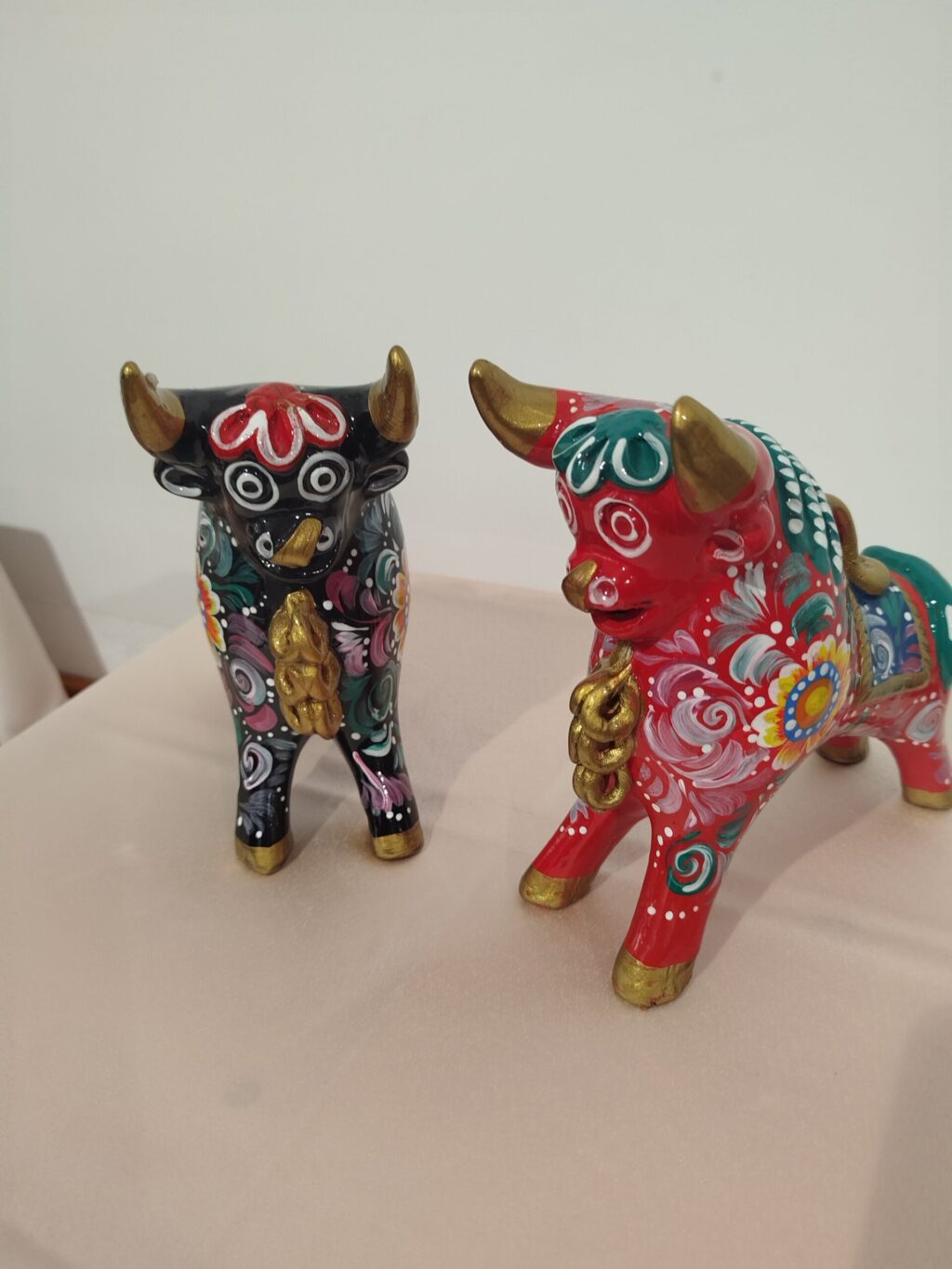
Toritos de Pucurá
Toritos de Pucurá: The Pucurá bulls are Peruvian Andean amulets that symbolize protection, good luck, fertility, and prosperity for the home. They represent Andean duality and unity, and are placed in pairs on rooftops to bless the family. These figures blend pre-Hispanic traditions with the arrival of the Spanish bull, and include symbolic details and colors that convey meanings such as strength, protection, and peace.
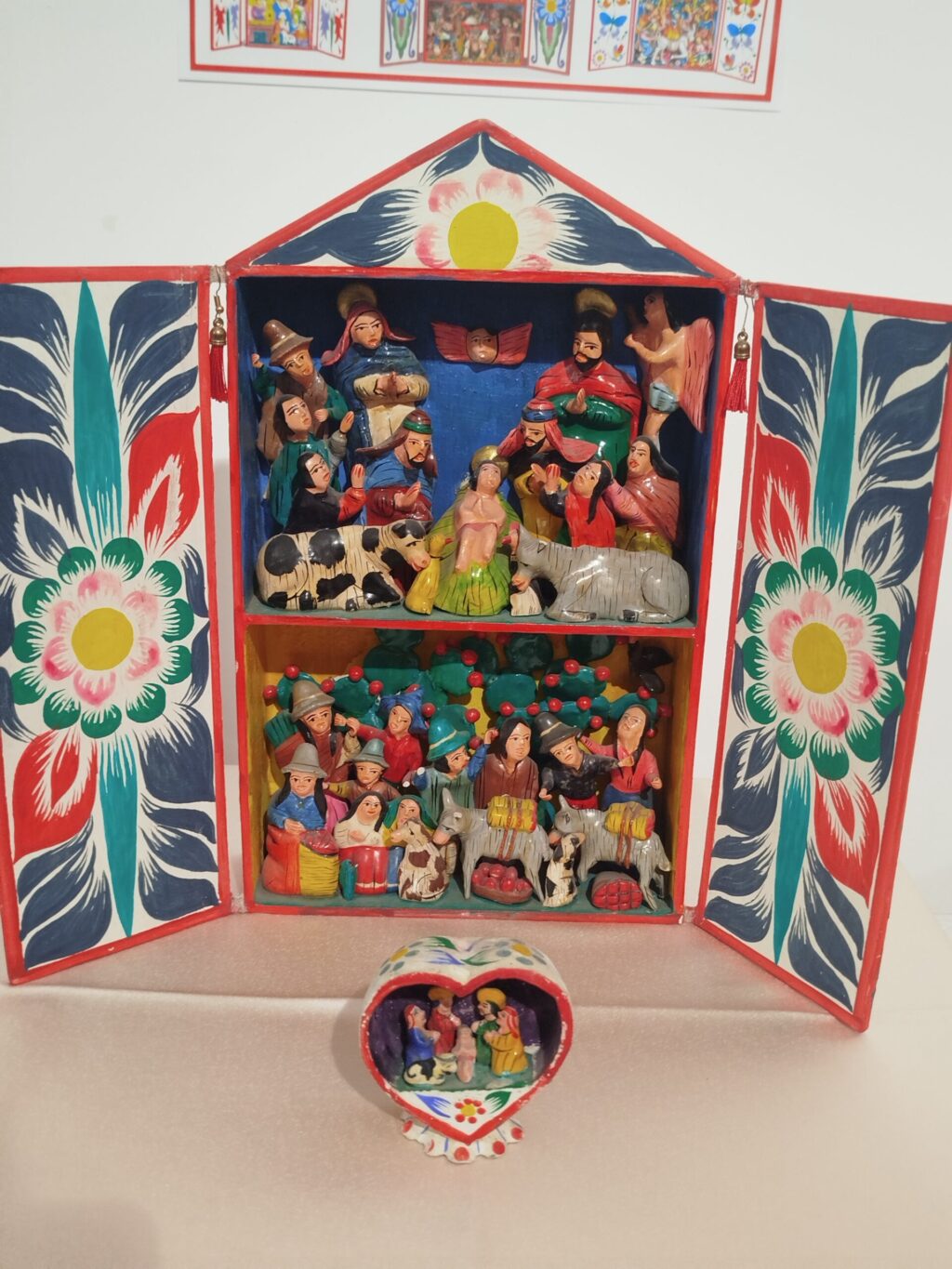
Retablo Ayacuchano
Retablo Ayacuchano: The Ayacucho altarpiece is an expression of Peruvian folk art that combines tradition, history, and faith. Handcrafted, it depicts scenes of daily life, Andean festivities and customs, and religious landscapes. Its colorful and detailed figures reflect the cultural identity of Ayacucho and convey values, collective memory, and ancestral creativity.
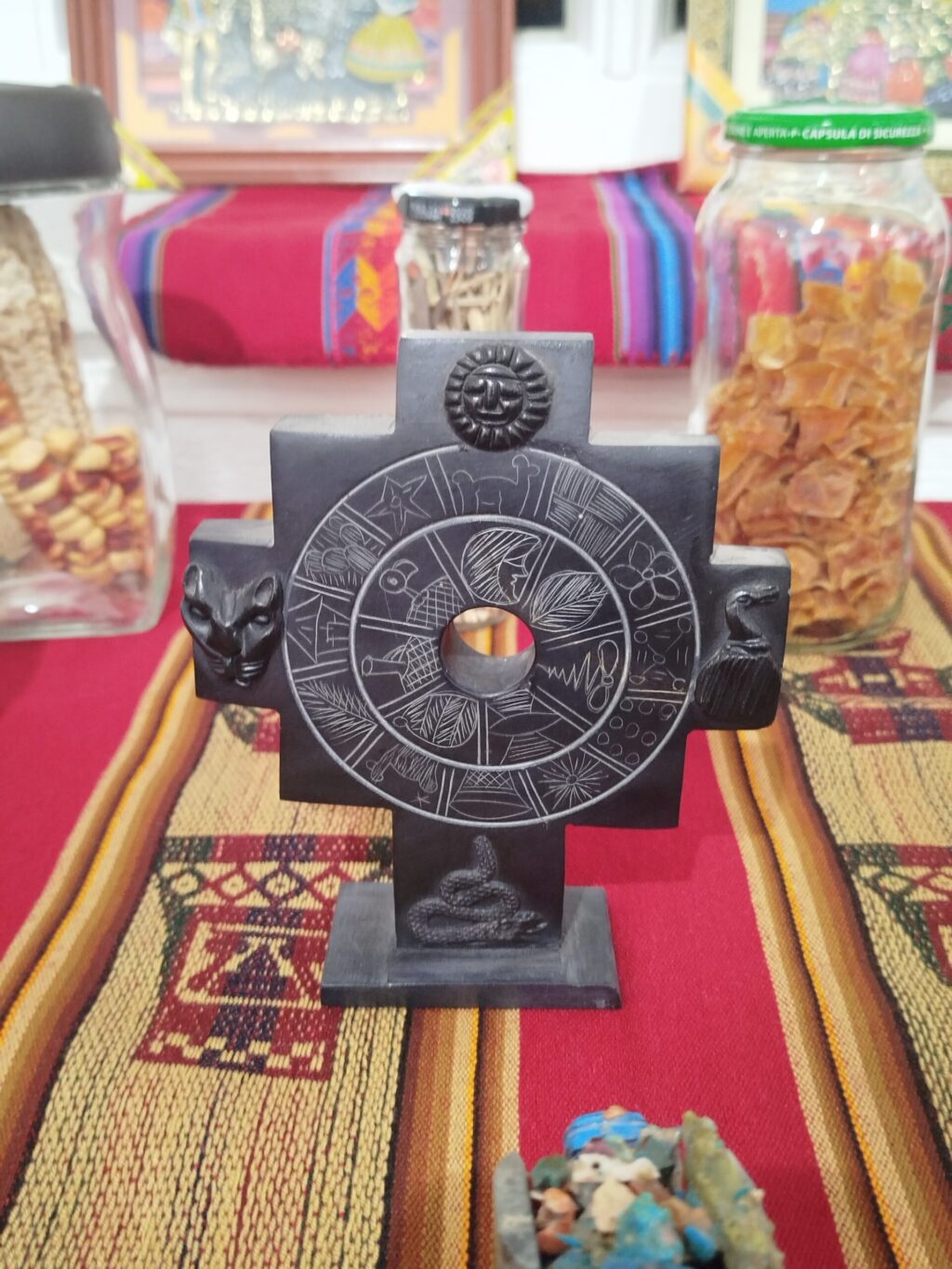
Chakana
The 3rd item – (How I see) It seemed like an interesting artifact to me, and it turned out to be a Chakana, or Cruz Andina. It appears to be made of wood and divided into 12 sections, representing a 12-hour numeric system. The inner circle shows the number 7, considered a magical number in many cultures — especially in Asia (notably China) and in Hungarian history (7 tribes).
The 4 cardinal directions are represented by totem animals:
- East – Condor
- North – Sun
- South – Snake (a symbol connected to the great flood in human history; it represents new beginnings and cycles, and can be found in thresholds of ancient temples around the world — in the Americas, Malta, and Indonesia)
- West – Jaguar / Puma
I believe that the hole in the center represents the door or gateway into another dimension of realization. When you have accumulated experience in life and the courage to step through it, I feel it can symbolize a transformative passage—a way to gain deeper understanding and feel more connected. (I will do more research about this.)
Overall, I really enjoyed this night, with its mix of dance, music, and handcrafted items. I hope this helps you understand Peruvian culture better. It is an honour that I was inspired by this show and could share some insight into the vivid life Peru has to offer. Even though I have never been there, I am now inspired by their joyful way of living and their celebration of life.
¡Muchas gracias a todos y hasta luego!
— Dan